How Uranium Conversion Works: Inside a Critical Step in the Nuclear Fuel Cycle
Before uranium can be used to generate electricity in a nuclear reactor, it must pass through several industrial processes that prepare it for use as nuclear fuel. One of these steps is uranium conversion, a specialized chemical process within the nuclear fuel cycle.
A uranium conversion facility is not a nuclear reactor and does not generate electricity. Instead, it transforms uranium concentrate into a chemical form suitable for enrichment, the next stage of fuel production. This article focuses on the conversion process used to produce uranium hexafluoride (UF₆) for enrichment.
So, what happens inside a uranium conversion facility, and why is this process important to the nuclear industry?
Where Uranium Conversion Fits in the Nuclear Fuel Cycle
For most commercial reactors, the nuclear fuel cycle follows five main stages:
- Mining and milling: Uranium is extracted from the ground and processed into a concentrated uranium product commonly known as yellowcake.
- Conversion: Uranium concentrate is chemically processed into uranium hexafluoride (UF₆), the form required for enrichment.
- Enrichment: The concentration of uranium-235, the isotope needed to sustain a nuclear chain reaction in most commercial reactors, is increased.
- Fuel fabrication: Enriched uranium is processed into ceramic fuel pellets, which are assembled into fuel rods and reactor fuel assemblies.
- Electricity generation: Fuel assemblies are loaded into a nuclear reactor, where controlled nuclear fission produces heat that can be used to generate electricity.
According to the U.S. Nuclear Regulatory Commission (NRC), natural uranium contains approximately 0.7% uranium-235, while enrichment typically increases that concentration to 3–5% for conventional light-water reactors. The purpose of conversion is to change uranium’s chemical form so it can undergo enrichment. To understand how that transformation works, it helps to start with the material entering the uranium conversion facility.
What Material Enters a Uranium Conversion Facility?
Uranium conversion begins with uranium oxide concentrate, commonly called yellowcake. It is produced when uranium-bearing material is extracted and processed to separate uranium from unwanted materials, creating a concentrated product for further processing.
The resulting concentrate commonly contains triuranium octoxide (U₃O₈), a uranium compound. Depending on the process, additional refining may take place at a separate facility before the material is transported for conversion into uranium hexafluoride (UF₆).
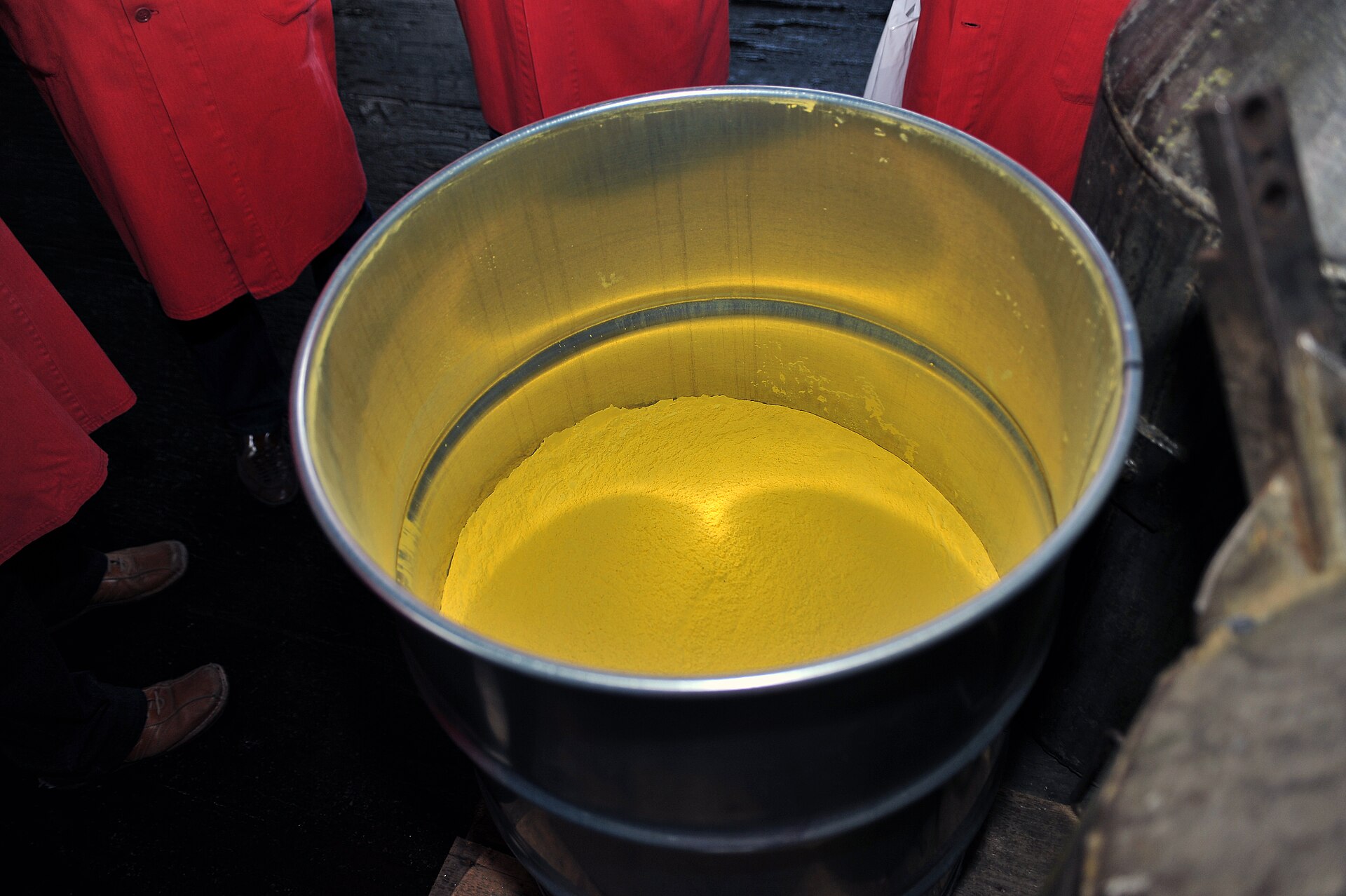 Photo Credit: Dean Calma / IAEA Imagebank
How Uranium Is Converted From Yellowcake to UF₆
Inside a uranium conversion facility, uranium passes through a series of chemical reactions that transform it from an oxide concentrate into uranium hexafluoride (UF₆). The exact sequence depends on the facility’s process design, but generally involves four key stages:
- Purification
Impurities remaining from mining and milling are removed to meet the requirements of enrichment facilities. Depending on the conversion method, purification can occur early or later in the process.
- Reduction to uranium dioxide
Through controlled heating and chemical reactions, uranium nitrates are transformed, through multiple steps, into uranium dioxide (UO₂). This intermediate form prepares the material for the next chemical reaction.
- Conversion to uranium tetrafluoride
Uranium dioxide reacts with hydrogen fluoride to produce uranium tetrafluoride (UF₄), sometimes called green salt.
- Production of uranium hexafluoride
Uranium tetrafluoride reacts with fluorine gas to produce uranium hexafluoride (UF₆), which can be converted into a gas for enrichment.
Wet vs. Dry Conversion Processes
Not every uranium conversion facility follows the same processing route. Commercial facilities generally use one of two approaches, known as wet conversion and dry conversion. The main difference is how and when impurities are removed.
In a wet conversion process, uranium concentrate is dissolved in nitric acid, allowing uranium to be separated from impurities through chemical purification. The purified material is then processed through subsequent stages to produce UF₆.
In a dry conversion process, uranium concentrate undergoes thermal and chemical treatment before being converted into UF₆. Purification occurs later, typically through distillation of the resulting uranium hexafluoride.
According to the World Nuclear Association, wet conversion is used by major facilities in Canada, France, China and Russia, while the United States has historically used a dry conversion approach. Regardless of the process used, the objective is the same: producing uranium hexafluoride suitable for enrichment.
What Leaves a Uranium Conversion Facility?
The primary output of a uranium conversion facility is uranium hexafluoride (UF₆). It leaves the facility as a solid, which is the safest form for transportation. This particular compound is important because it can be converted to a gas under suitable conditions, making it compatible with the equipment used in uranium enrichment.
Modern enrichment facilities typically use gas centrifuges, which spin UF₆ gas at high speeds to separate uranium isotopes based on slight differences in their mass. This allows the concentration of uranium-235 to be increased to the levels required for most commercial light-water reactors.
Once UF₆ has been produced, it must be prepared for storage and transportation. The material exits the conversion process as a gas and is ultimately transferred into specially designed steel cylinders. It then cools and solidifies before shipment to an enrichment facility, where the UF₆ is heated and returned to a gaseous state for processing.
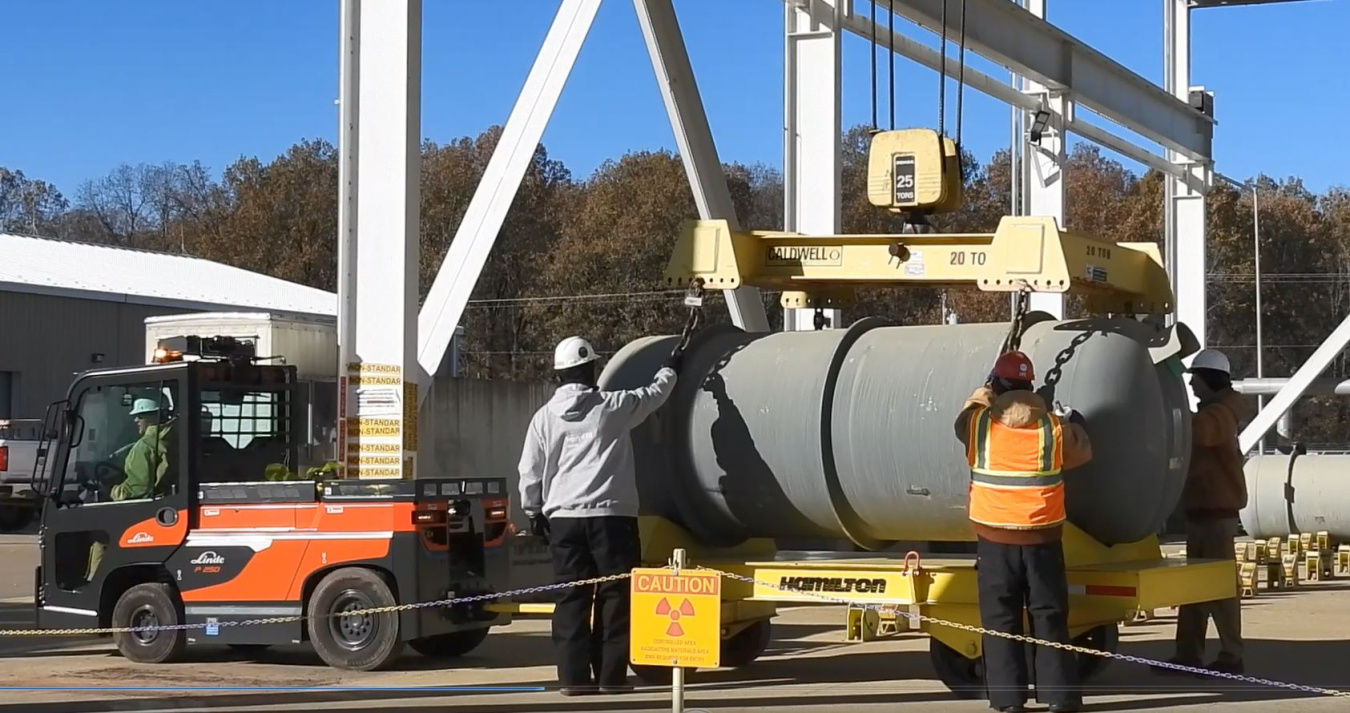 Photo Credit: U.S. Department of Energy, Uranium hexafluoride cylinders being handled at the Paducah Site in Kentucky.
How Is Safety Managed During Uranium Conversion?
Uranium conversion involves industrial chemical processing, with safety systems designed to manage the hazards associated with the materials and processes involved. These include chemicals such as fluorine and hydrogen fluoride, as well as uranium hexafluoride, which can react with moisture to form hydrogen fluoride and uranyl fluoride. Facilities must also manage radiation protection and potential uranium exposure, along with fire and explosion hazards associated with the use of hydrogen gas.
To support safe operations, uranium conversion facilities rely on several systems and procedures, including:
- Containment systems to prevent hazardous materials from escaping processing equipment.
- Ventilation and air treatment systems to control airborne contaminants and reduce potential exposure.
- Monitoring and leak detection to identify abnormal operating conditions or potential releases.
- Fire protection and emergency response procedures to manage industrial hazards and reduce the consequences of incidents.
- Regulatory oversight to establish requirements for facility design, operation, worker protection and environmental performance.
The specific safety systems and procedures depend on the facility’s design, chemical processes and regulatory requirements. In the United States, uranium conversion facilities are subject to oversight by the NRC, which establishes requirements for facility licensing, operations and safety.
Why Uranium Conversion Matters to the Nuclear Fuel Cycle
The specialized processes, equipment and safety requirements involved in uranium conversion help explain why this stage of the nuclear fuel cycle depends on dedicated industrial infrastructure. Without sufficient conversion capacity, mined and processed uranium cannot advance to enrichment in the chemical form required by conventional light-water reactor fuel supply chains.
According to the World Nuclear Association, commercial uranium conversion operations are located in five countries: Canada, China, France, Russia and the United States. In North America, only two established commercial conversion facilities serve this stage of the nuclear fuel cycle, one in Canada and one in the United States.
In the United States, commercial uranium conversion infrastructure is concentrated at a single facility in Metropolis, Illinois, historically known as Honeywell Metropolis Works. The facility resumed production in July 2023 after more than five years in standby.
In Canada, Cameco operates the Port Hope Conversion Facility in Ontario, the country’s only commercial uranium conversion facility. In 2025, Cameco reported producing a record 11.2 million kilograms of uranium as UF₆ at Port Hope, demonstrating the substantial volumes handled by established conversion operations.
As North American nuclear development advances, maintaining reliable access to conversion services will remain an important consideration for utilities, fuel suppliers and policymakers.
Nucleon Fuel is working to contribute to this capacity through its SMT-5000 modular conversion platform, with development activities in Wyoming. Its first planned facility, NCF-1, would initially deploy one SMT-5000 train, producing approximately 5,000 tonnes of uranium as UF₆ annually, with provision for additional trains.
Ultimately, uranium conversion illustrates how many specialized industrial capabilities must work together to support nuclear electricity generation. Understanding what happens inside these facilities provides a clearer picture of the infrastructure, technical expertise and supply-chain coordination required to turn uranium resources into reliable nuclear fuel.
For a closer look at the broader supply-chain implications, read our article: The Nuclear Fuel Supply Chain: Why Conversion Capacity Is the Bottleneck Nobody’s Talking About.